Beyond GPS Tracking: NepTrack’s Vision for a Smarter Nepal
न्युजभित्तो/७ जेष्ठ २०८३, बिहीबार १५:३६
Ditik Rimal
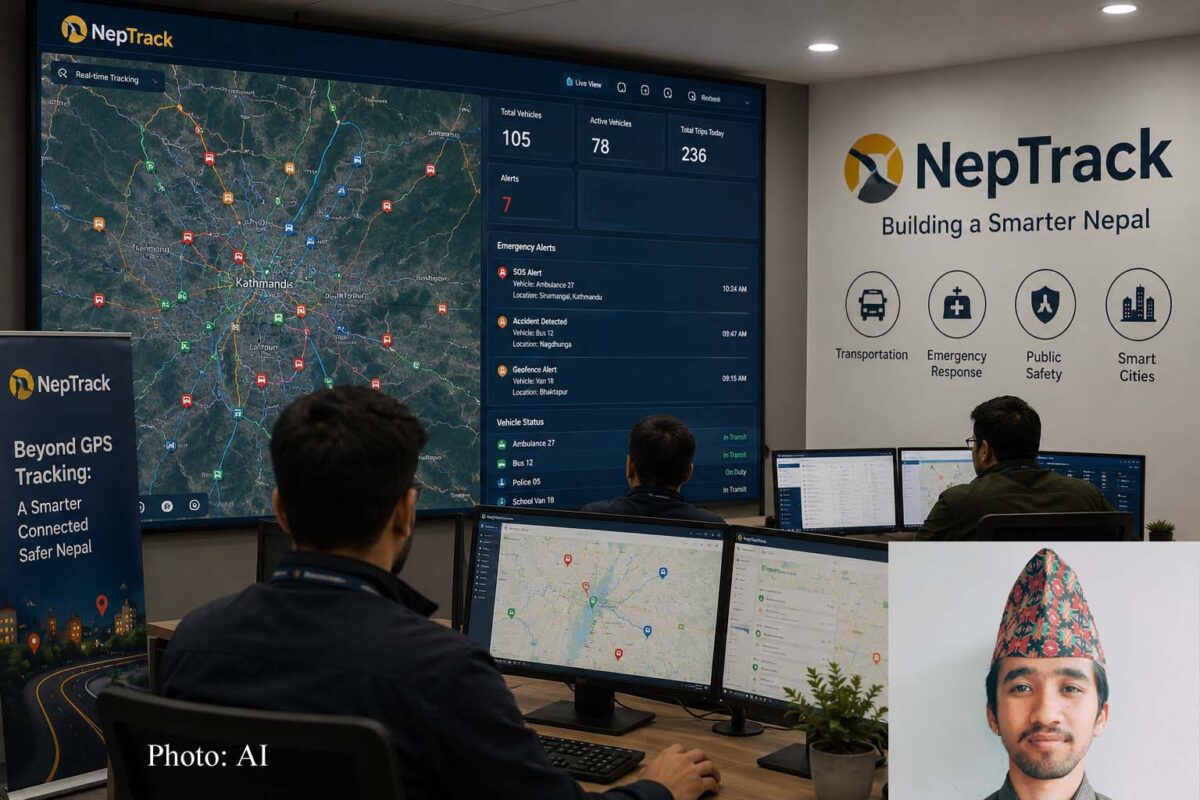
As Nepal continues to face growing challenges in transportation management, emergency response, and public service coordination, Nepal based technology company NepTrack is attempting to position GPS infrastructure as more than just a commercial tracking tool.
Founded under the leadership of Kaushal Joshi, the company says its focus is centered on building a long term digital ecosystem capable of supporting smarter transportation systems, faster emergency response, and better public service accessibility across the country.
“We are trying to present a vision rather than simply sell a product,” Joshi said during a recent discussion. “As transportation challenges, road damages, and accidents continue to increase, we want to help create systems that can respond to these problems more rapidly and efficiently.”
According to the company, one of the major concerns in Nepal’s urban areas is emergency response time. Ambulances operating in congested cities can often take anywhere from 40 minutes to over an hour to reach patients. NepTrack believes technology driven coordination systems could significantly improve this process.
“It’s not only about speed,” Joshi explained. “It’s about management, coordination, and using technology to identify and dispatch the nearest available emergency services instead of relying solely on traditional and manual communication during critical situations.”
The company is currently working on systems involving GPS based tracking, SOS emergency features, transportation coordination, and centralized service integration. Their broader vision also includes future possibilities such as smarter public transportation tracking, allowing citizens to better monitor bus routes and waiting times in real time.
NepTrack further emphasized that while many tracking devices in the market rely heavily on generic white label platforms, the company has focused on building systems compliant with Nepal’s regulatory standards. Representatives stated that their infrastructure follows regulations set by authorities including the Nepal Telecommunications Authority (NTA) and the Ministry of Transportation, while also maintaining Nepal based server handling for operational data.
Joshi stated that the company’s goal is not to monopolize the industry, but to encourage stronger standards and awareness around digital infrastructure and data management.
“We are approaching government institutions with a vision, not with the intention of dominating the market,” he said. “The idea comes from experiences I witnessed while living abroad, where technology and emergency services are deeply integrated to support citizens more effectively.”
The company says it has been conducting presentations and pilot discussions with municipalities, provinces, and various institutions to demonstrate how centralized GPS ecosystems could eventually support sectors such as healthcare, policing, education, and public transportation.
As Nepal gradually advances toward digital governance and smart infrastructure, initiatives like NepTrack reflect a growing push toward locally managed technological solutions focused not just on commercialization, but on long term public service integration and national digital development.










Ditik Rimal
As Nepal continues to face growing challenges in transportation management, emergency response, and public service coordination, Nepal based technology company NepTrack is attempting to position GPS infrastructure as more than just a commercial tracking tool.
Founded under the leadership of Kaushal Joshi, the company says its focus is centered on building a long term digital ecosystem capable of supporting smarter transportation systems, faster emergency response, and better public service accessibility across the country.
“We are trying to present a vision rather than simply sell a product,” Joshi said during a recent discussion. “As transportation challenges, road damages, and accidents continue to increase, we want to help create systems that can respond to these problems more rapidly and efficiently.”
According to the company, one of the major concerns in Nepal’s urban areas is emergency response time. Ambulances operating in congested cities can often take anywhere from 40 minutes to over an hour to reach patients. NepTrack believes technology driven coordination systems could significantly improve this process.
“It’s not only about speed,” Joshi explained. “It’s about management, coordination, and using technology to identify and dispatch the nearest available emergency services instead of relying solely on traditional and manual communication during critical situations.”
The company is currently working on systems involving GPS based tracking, SOS emergency features, transportation coordination, and centralized service integration. Their broader vision also includes future possibilities such as smarter public transportation tracking, allowing citizens to better monitor bus routes and waiting times in real time.
NepTrack further emphasized that while many tracking devices in the market rely heavily on generic white label platforms, the company has focused on building systems compliant with Nepal’s regulatory standards. Representatives stated that their infrastructure follows regulations set by authorities including the Nepal Telecommunications Authority (NTA) and the Ministry of Transportation, while also maintaining Nepal based server handling for operational data.
Joshi stated that the company’s goal is not to monopolize the industry, but to encourage stronger standards and awareness around digital infrastructure and data management.
“We are approaching government institutions with a vision, not with the intention of dominating the market,” he said. “The idea comes from experiences I witnessed while living abroad, where technology and emergency services are deeply integrated to support citizens more effectively.”
The company says it has been conducting presentations and pilot discussions with municipalities, provinces, and various institutions to demonstrate how centralized GPS ecosystems could eventually support sectors such as healthcare, policing, education, and public transportation.
As Nepal gradually advances toward digital governance and smart infrastructure, initiatives like NepTrack reflect a growing push toward locally managed technological solutions focused not just on commercialization, but on long term public service integration and national digital development.